E-COMMERCE
E-COMMERCE
Mobile UX
Mobile UX
Passion Project
Passion Project
Thrifty: Designing for How Indians Actually Bargain
Thrifty: Designing for How Indians Actually Bargain
Thrifty: Designing for How Indians Actually Bargain
For thrift shopping/one-of-a-kind inventory platforms
For thrift shopping/one-of-a-kind inventory platforms
For thrift shopping/one-of-a-kind inventory platforms
Designing a structured bargaining feature for an India-first thrift shopping app, grounded in primary research on how young urban Indians negotiate, and why existing platforms get it wrong.
Designing a structured bargaining feature for an India-first thrift shopping app, grounded in primary research on how young urban Indians negotiate, and why existing platforms get it wrong.
ROLE
Product Designer
TIMELINE
2022-Ongoing
TOOLS
Figma
FigJam
Google Forms
Google Gemini
SKILLS
UX Research
UI Design
Interaction Design
ROLE
Product Designer
TOOLS
Figma
FigJam
Google Forms
Google Gemini
TIMELINE
2022-Ongoing
SKILLS
UX Research
UI Design
Interaction Design

Introduction
Bargaining is a ritual. Walk through Sarojini Nagar on a Saturday and you'll see it: the pause before a counter, the laugh that seals a deal, the pride of walking away with something good at a price that felt fair. It's social, it's human, and for a lot of young Indians, it's genuinely fun.
Bargaining is a ritual. Walk through Sarojini Nagar on a Saturday and you'll see it: the pause before a counter, the laugh that seals a deal, the pride of walking away with something good at a price that felt fair. It's social, it's human, and for a lot of young Indians, it's genuinely fun.
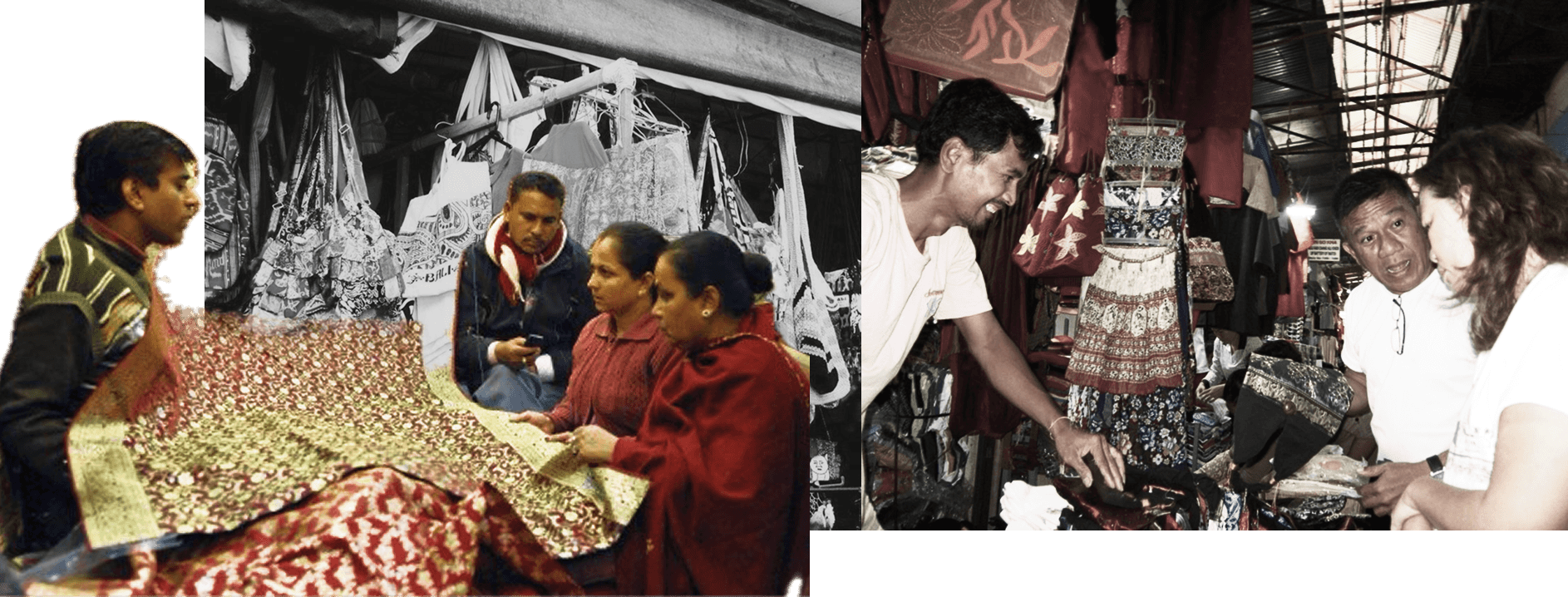
Thrifty is a passion project I've been building since 2022, sparked by a surge in thrift shopping communities on Instagram and Reddit and a gap in the market for an India-first platform.
Thrifty is a passion project I've been building since 2022, sparked by a surge in thrift shopping communities on Instagram and Reddit and a gap in the market for an India-first platform.
Think Depop, built for Indian users and Indian market behaviour.
The app is for buying and selling second-hand clothing, one-of-a-kind inventory without fixed prices. Bargaining belongs here. An earlier version of this feature tried to make it work. This case study is about why it fell short, what the research revealed, and how a better design emerged.
Think Depop, built for Indian users and Indian market behaviour.
The app is for buying and selling second-hand clothing, one-of-a-kind inventory without fixed prices. Bargaining belongs here. An earlier version of this feature tried to make it work. This case study is about why it fell short, what the research revealed, and how a better design emerged.
Initial Problem Statement
Thrift shopping in India is growing, but conversion on platforms like Depop remains low.
Sellers list items, buyers browse, but a meaningful gap exists between what buyers are willing to pay and what sellers have priced. In physical markets, bargaining bridges that gap naturally. On a digital platform, there was no equivalent.
The initial solution, Bargain Rooms, introduced a chat-based space where buyers and sellers could negotiate in real time, assisted by an AI mediator that suggested fair prices and helped facilitate agreement.
Thrift shopping in India is growing, but conversion on platforms like Depop remains low.
Sellers list items, buyers browse, but a meaningful gap exists between what buyers are willing to pay and what sellers have priced. In physical markets, bargaining bridges that gap naturally. On a digital platform, there was no equivalent.
The initial solution, Bargain Rooms, introduced a chat-based space where buyers and sellers could negotiate in real time, assisted by an AI mediator that suggested fair prices and helped facilitate agreement.

Bargain Room (2022):
Buyer's POV
Bargain Room (2022):
Buyer's POV

Bargain Assistant Concept (2022): Buyer's POV
Bargain Assistant Concept (2022):
Buyer's POV

Bargain Room (2022):
Seller's POV
Bargain Room (2022):
Seller's POV

Bargain Assistant Concept (2022): Seller's POV
Bargain Assistant Concept (2022):
Seller's POV
The concept had the right instincts but a critical flaw: the AI felt bolted on.
The concept had the right instincts but a critical flaw: the AI felt bolted on.
It sat inside a chat window, suggesting prices like a referee nobody asked for.
The negotiation itself was unstructured with no rounds, no time limits, no floor logic, which meant sellers got overwhelmed, buyers felt anxious about first offers, and conversations either dragged or fizzled. The experience reproduced the worst parts of DM negotiation with an AI-shaped veneer on top.
The question this project set out to answer:
It sat inside a chat window, suggesting prices like a referee nobody asked for.
The negotiation itself was unstructured with no rounds, no time limits, no floor logic, which meant sellers got overwhelmed, buyers felt anxious about first offers, and conversations either dragged or fizzled. The experience reproduced the worst parts of DM negotiation with an AI-shaped veneer on top.
The question this project set out to answer:
What would a bargaining feature actually need to feel right?
What would a bargaining feature actually need to feel right?
Research
Overview
Two primary research studies informed this project, grounding the design in what users actually said and felt rather than assumptions.
Two primary research studies informed this project, grounding the design in what users actually said and felt rather than assumptions.
Study 1
Study 1
Thrift Shopping Behaviour Survey (2020)
Thrift Shopping Behaviour Survey (2020)
115 respondents, primarily urban Indian youth.
Mapped attitudes toward thrift shopping, purchase intent, platform expectations, and quality concerns.
115 respondents, primarily urban Indian youth.
Mapped attitudes toward thrift shopping, purchase intent, platform expectations, and quality concerns.
Study 2
Study 2
From Sarojini Nagar to Colaba Causeway (2025)
From Sarojini Nagar to Colaba Causeway (2025)
29 respondents, primarily urban Indian youth.
Focused on bargaining psychology: when people bargain, how they feel, what makes a negotiation feel fair, and whether they'd trust a digital system to replicate the experience.
29 respondents, primarily urban Indian youth.
Focused on bargaining psychology: when people bargain, how they feel, what makes a negotiation feel fair, and whether they'd trust a digital system to replicate the experience.
Together, the studies told a layered story:
Together, the studies told a layered story:
The appetite for thrift shopping is real, the love of bargaining is genuine, but digital execution has consistently failed to capture either.
The appetite for thrift shopping is real, the love of bargaining is genuine, but digital execution has consistently failed to capture either.
What the 2020 Survey Revealed
85% of respondents had heard of thrift shopping; 90% were open to buying second-hand online. 73% said they'd consider pre-loved clothing, though quality assurance was the most cited concern.
85% of respondents had heard of thrift shopping; 90% were open to buying second-hand online. 73% said they'd consider pre-loved clothing, though quality assurance was the most cited concern.
The dominant sentiment when imagining an online thrift experience was trust: respondents used words like genuine, transparent, verified, reliable, and honest repeatedly.
The dominant sentiment when imagining an online thrift experience was trust: respondents used words like genuine, transparent, verified, reliable, and honest repeatedly.
Takeaway:
Takeaway:
Users are ready. But they need to trust the product before they'll consider negotiating the price.
Users are ready. But they need to trust the product before they'll consider negotiating the price.
What the 2025 Survey Revealed
The majority of respondents bargain regularly, most often in street markets. This confirmed bargaining as a practised behaviour, not an aspirational one.
The majority of respondents bargain regularly, most often in street markets. This confirmed bargaining as a practised behaviour, not an aspirational one.
Top motivations included getting a fair price, but a significant share cited the experience itself: the back-and-forth, the feeling of winning, the social interaction. Bargaining isn't always rational; it's often recreational.
Top motivations included getting a fair price, but a significant share cited the experience itself: the back-and-forth, the feeling of winning, the social interaction. Bargaining isn't always rational; it's often recreational.
Respondents described three emotional states across a negotiation: anticipation before making an offer, anxiety during the exchange, and satisfaction or disappointment at resolution.
Respondents described three emotional states across a negotiation: anticipation before making an offer, anxiety during the exchange, and satisfaction or disappointment at resolution.
The anxiety peak was consistently tied to not knowing whether the offer was reasonable, a clear design signal.
The anxiety peak was consistently tied to not knowing whether the offer was reasonable, a clear design signal.
On what makes a negotiation feel fair: transparency about condition, a seller willing to meet in the middle, and access to comparable prices before making an offer ranked highest.
On what makes a negotiation feel fair: transparency about condition, a seller willing to meet in the middle, and access to comparable prices before making an offer ranked highest.
When asked about AI facilitation, the most common concern wasn't distrust of AI but wanting it to feel like background support, not a visible arbiter. They didn't want a chatbot. They wanted better information.
When asked about AI facilitation, the most common concern wasn't distrust of AI but wanting it to feel like background support, not a visible arbiter. They didn't want a chatbot. They wanted better information.
The Signal Across Both Studies
The 2020 data confirmed that Thrifty's users are price-conscious, trust-motivated, and ready for the platform. The 2025 data revealed that the emotional experience of bargaining matters as much as the outcome,
The 2020 data confirmed that Thrifty's users are price-conscious, trust-motivated, and ready for the platform. The 2025 data revealed that the emotional experience of bargaining matters as much as the outcome,
and that the single biggest failure point is information asymmetry. Buyers don't know what a fair offer looks like. Sellers don't know what they're walking into.
and that the single biggest failure point is information asymmetry. Buyers don't know what a fair offer looks like. Sellers don't know what they're walking into.
Any feature that doesn't address this first is building on unstable ground.
Any feature that doesn't address this first is building on unstable ground.
Reframed Problem Statement
Bargaining on Indian thrift apps fails, not because users don't want to negotiate, but because there's no shared context, no emotional scaffolding, and no structure that protects either party. Sellers get overwhelmed, buyers get anxious, and deals fall through before they begin.
Bargaining on Indian thrift apps fails, not because users don't want to negotiate, but because there's no shared context, no emotional scaffolding, and no structure that protects either party. Sellers get overwhelmed, buyers get anxious, and deals fall through before they begin.
USER PERSONAS
USER PERSONAS
USER PERSONAS

Riya, 21, NEW Delhi
The Thrill-Seeker
College student. Shops the way she browses Sarojini Nagar: impulsively, joyfully, with a sharp eye for anything Y2K. She'll bargain without hesitation in person, but online she second-guesses herself. She doesn't know if her offer is too low, or if the seller will think she's being rude. She wants the thrill of a deal but needs scaffolding to take the first step.
Needs:
Confidence before making an offer. Social safety if it doesn't land. Closure that doesn't drag.
Pain points:
No reference point for a fair offer. Fear of awkwardness with a human seller. Ghosting after showing genuine interest.

Karan, 26, Mumbai
The Deliberate Buyer
Early career professional. A fair dealer who doesn't lowball or play games. He'll negotiate, but only if it's grounded in something real. Without comparable prices or a clear endpoint, the process feels arbitrary and not worth his time. Most likely to abandon a potential purchase mid-negotiation because the experience isn't giving him what he needs.
Needs:
Market price context. A clear structure with a visible end point. Efficiency.
Pain points:
No price benchmarking before making an offer. Open-ended negotiations with no resolution mechanism. Sellers who go silent after engaging.
Problem Framing
When the three personas were mapped onto the same problem space, a single root cause emerged: bargaining on digital platforms has no structure, no shared context, and no protection for either party.
Riya's problem is emotional.
Karan's is informational.
Meera's is operational.
All three are solvable with the same underlying mechanism: a structured, time-bound negotiation system built into the listing itself, with price intelligence surfaced at the right moment for both sides.
The design challenge wasn't to digitise bargaining. It was to give it form.

Meera, 28, Bengaluru
The Dual-Mode Seller
Working professional, part-time reseller. Open to negotiating but not running a business. The current reality of selling on apps is exhausting: offers through DMs at odd hours, some insultingly low, buyers who vanish after she accepts. She has no way to sort, prioritize, or protect herself from time-wasters.
Needs:
The ability to signal openness without inviting chaos. Protection from offers that aren't serious. An organized inbox.
Pain points:
Chaotic DMs with no structure. No way to filter low-effort offers. Time spent on negotiations that don't convert.
Problem Framing
When the three personas were mapped onto the same problem space, a single root cause emerged: bargaining on digital platforms has no structure, no shared context, and no protection for either party.
Riya's problem is emotional.
Karan's is informational.
Meera's is operational.
All three are solvable with the same underlying mechanism: a structured, time-bound negotiation system built into the listing itself, with price intelligence surfaced at the right moment for both sides.
The design challenge wasn't to digitise bargaining. It was to give it form.
Problem Framing
When the three personas were mapped onto the same problem space, a single root cause emerged: bargaining on digital platforms has no structure, no shared context, and no protection for either party.
Riya's problem is emotional.
Karan's is informational.
Meera's is operational.
All three are solvable with the same underlying mechanism: a structured, time-bound negotiation system built into the listing itself, with price intelligence surfaced at the right moment for both sides.
The design challenge wasn't to digitise bargaining. It was to give it form.
How Might We
HMW give buyers a sense of what's a reasonable offer before they commit to one?
HMW give buyers a sense of what's a reasonable offer before they commit to one?
HMW reduce the social stakes of making an offer that doesn't land?
HMW reduce the social stakes of making an offer that doesn't land?
HMW give both parties shared price context so negotiation feels grounded, not random?
HMW give both parties shared price context so negotiation feels grounded, not random?
HMW create a clear endpoint so negotiations don't drag or fizzle out?
HMW create a clear endpoint so negotiations don't drag or fizzle out?
HMW let sellers signal openness to bargaining without inviting chaos?
HMW let sellers signal openness to bargaining without inviting chaos?
HMW give sellers meaningful control over a negotiation without making it a second job?
HMW give sellers meaningful control over a negotiation without making it a second job?
HMW design a negotiation experience that feels human and warm without relying on freeform chat?
HMW design a negotiation experience that feels human and warm without relying on freeform chat?
Brainstorming / Solution Mapping
Competitive audit
Bargaining Mechanism
Bargaining Mechanism
What It Misses
What It Misses
Depop
Depop
DM-based, etiquette-driven
DM-based, etiquette-driven
Bargaining Mechanism
No structure, no price context, seller overwhelm
No structure, no price context, seller overwhelm
What It Misses
Depop
DM-based, etiquette-driven
No structure, no price context, seller overwhelm
Vinted
Vinted
Vinted
Fixed price only
Fixed price only
Fixed price only
No bargaining at all
No bargaining at all
No bargaining at all
Poshmark
Poshmark
Poshmark
Offer to Likers, no counter
Offer to Likers, no counter
Offer to Likers, no counter
No back-and-forth, no buyer reasoning
No back-and-forth, no buyer reasoning
No back-and-forth, no buyer reasoning
eBay
eBay
eBay
Best Offer with auto-rules
Best Offer with auto-rules
Best Offer with auto-rules
Cold and transactional, no human context
Cold and transactional, no human context
Cold and transactional, no human context
The gap across all four: no shared context, no emotional scaffolding, no protection for either party. That gap was the design space.
The gap across all four: no shared context, no emotional scaffolding, no protection for either party. That gap was the design space.
Concepts Explored
DIRECTION A

A condition note, a personal reason, anything. Research supports this strongly: negotiations succeed at significantly higher rates when any reason is given, even a trivial one.
A condition note, a personal reason, anything. Research supports this strongly: negotiations succeed at significantly higher rates when any reason is given, even a trivial one.
DIRECTION B
Directly addresses Karan's need and the anxiety spike from the 2025 research.

Directly addresses Karan's need and the anxiety spike from the 2025 research.
DIRECTION C

The round counter makes the rules legible to everyone upfront, like innings in cricket.
The round counter makes the rules legible to everyone upfront, like innings in cricket.
DIRECTION D

No buyer left waiting indefinitely, no listing stuck in limbo.
No buyer left waiting indefinitely, no listing stuck in limbo.
DIRECTION E

Compelling conceptually, but it reintroduced the Bargain Rooms problem: AI as a visible actor felt artificial to users who wanted information support, not a proxy. Deprioritised.
Compelling conceptually, but it reintroduced the Bargain Rooms problem: AI as a visible actor felt artificial to users who wanted information support, not a proxy. Deprioritised.
The Decision
No single direction solved all three personas' problems alone.
No single direction solved all three personas' problems alone.
The strongest concept combined Directions A through D into one coherent system: price intelligence reduces anxiety before an offer, a reason field adds human context, structured rounds give both parties clarity, and time-boxing prevents dead air and seller overwhelm.
The strongest concept combined Directions A through D into one coherent system: price intelligence reduces anxiety before an offer, a reason field adds human context, structured rounds give both parties clarity, and time-boxing prevents dead air and seller overwhelm.
The private floor (Direction C), suggested by the app and adjustable by the seller, is where the intelligence layer earns its place: doing real work in the background without being a visible participant.
The private floor (Direction C), suggested by the app and adjustable by the seller, is where the intelligence layer earns its place: doing real work in the background without being a visible participant.
This became the Thrifty bargaining system, an "Open to Offers" feature built into listings, designed to feel like a negotiation rather than a form submission.
This became the Thrifty bargaining system, an "Open to Offers" feature built into listings, designed to feel like a negotiation rather than a form submission.
*Bundling (negotiating on multiple items in a single offer) was explored during the design process and identified as a natural extension of the system, scoped for a subsequent release.
Feature Highlight
The "Open to Offers" system is a structured, time-bound negotiation feature built natively into Thrifty listings, replacing unstructured DM bargaining with shared context, a clear process, and protection for both sides.
The "Open to Offers" system is a structured, time-bound negotiation feature built natively into Thrifty listings, replacing unstructured DM bargaining with shared context, a clear process, and protection for both sides.

For buyers
Listings marked "Open to Offers" surface a dedicated offer flow from the product detail page. Before making an offer, buyers see comparable sold prices for similar items. They enter a price and are invited, not required, to add a reason. The negotiation runs up to 3 visible rounds. Offers below the seller's private floor are instantly and silently declined with no round consumed. Unanswered offers expire after 6 hours with a 3-hour reminder; buyers can resubmit or buy at the listed price immediately.
Listings marked "Open to Offers" surface a dedicated offer flow from the product detail page. Before making an offer, buyers see comparable sold prices for similar items. They enter a price and are invited, not required, to add a reason. The negotiation runs up to 3 visible rounds. Offers below the seller's private floor are instantly and silently declined with no round consumed. Unanswered offers expire after 6 hours with a 3-hour reminder; buyers can resubmit or buy at the listed price immediately.

For sellers
The app suggests a private floor price at listing time based on comparable sold listings, with the data made transparent. Sellers can accept, adjust, or override. The floor is never visible to buyers. Incoming offers are priority-sorted: highest amount, expiring soonest, final-round offers. Accept, counter, or decline from a single screen.
The app suggests a private floor price at listing time based on comparable sold listings, with the data made transparent. Sellers can accept, adjust, or override. The floor is never visible to buyers. Incoming offers are priority-sorted: highest amount, expiring soonest, final-round offers. Accept, counter, or decline from a single screen.
What it does differently
Every competitor has built a price exchange. Thrifty builds a negotiation. The difference is information, structure, and humanity: a buyer who knows what fair looks like, a seller who isn't drowning in noise, and shared rules before anyone makes a move.
Every competitor has built a price exchange. Thrifty builds a negotiation. The difference is information, structure, and humanity: a buyer who knows what fair looks like, a seller who isn't drowning in noise, and shared rules before anyone makes a move.
Feature flow mapping


Solution Feature BREAKDOWN // storytime
Solution Feature BREAKDOWN // storytime


A day later,
A day later,


Meanwhile,


Now, back to our girl Riya
Now, back to our girl Riya


Conclusion?
Thrifty has been with me since 2022, starting as a student portfolio project and growing into a genuine study of how thrift shopping works in India and why global platforms have never quite landed here.
The affordability of fast fashion has made it accessible to almost every urban Indian, and paradoxically that's exactly why second-hand shopping matters. The waste is enormous, and platforms like Depop and Poshmark were never designed with this context in mind.
The "Open to Offers" feature is one piece of a much larger product. Bargaining is central to Thrifty because it reflects how Indians actually shop: with warmth, a little back-and-forth, and the satisfaction of a deal that feels fair to both sides.
There is a lot more to build. I hope one day Thrifty becomes a real product, not just a case study.
THANK YOU FOR READING!
Research
Overview
Two primary research studies informed this project, grounding the design in what users actually said and felt rather than assumptions.
Study 1
Thrift Shopping Behaviour Survey (2020)
115 respondents, primarily urban Indian youth.
Mapped attitudes toward thrift shopping, purchase intent, platform expectations, and quality concerns.
Study 2
From Sarojini Nagar to Colaba Causeway (2025)
29 respondents, primarily urban Indian youth.
Focused on bargaining psychology: when people bargain, how they feel, what makes a negotiation feel fair, and whether they'd trust a digital system to replicate the experience.
Together, the studies told a layered story:
The appetite for thrift shopping is real, the love of bargaining is genuine, but digital execution has consistently failed to capture either.
What the 2020 Survey Revealed
85% of respondents had heard of thrift shopping; 90% were open to buying second-hand online. 73% said they'd consider pre-loved clothing, though quality assurance was the most cited concern.
The dominant sentiment when imagining an online thrift experience was trust: respondents used words like genuine, transparent, verified, reliable, and honest repeatedly.
Takeaway:
Users are ready. But they need to trust the product before they'll consider negotiating the price.
What the 2025 Survey Revealed
The majority of respondents bargain regularly, most often in street markets. This confirmed bargaining as a practised behaviour, not an aspirational one.
Top motivations included getting a fair price, but a significant share cited the experience itself: the back-and-forth, the feeling of winning, the social interaction. Bargaining isn't always rational; it's often recreational.
Respondents described three emotional states across a negotiation: anticipation before making an offer, anxiety during the exchange, and satisfaction or disappointment at resolution.
The anxiety peak was consistently tied to not knowing whether the offer was reasonable, a clear design signal.
On what makes a negotiation feel fair: transparency about condition, a seller willing to meet in the middle, and access to comparable prices before making an offer ranked highest.
When asked about AI facilitation, the most common concern wasn't distrust of AI but wanting it to feel like background support, not a visible arbiter. They didn't want a chatbot. They wanted better information.
The Signal Across Both Studies
The 2020 data confirmed that Thrifty's users are price-conscious, trust-motivated, and ready for the platform. The 2025 data revealed that the emotional experience of bargaining matters as much as the outcome,
and that the single biggest failure point is information asymmetry. Buyers don't know what a fair offer looks like. Sellers don't know what they're walking into.
Any feature that doesn't address this first is building on unstable ground.